
Town Of St. George
Including the Villages of Tenants Harbor, Port Clyde, and Spruce Head.
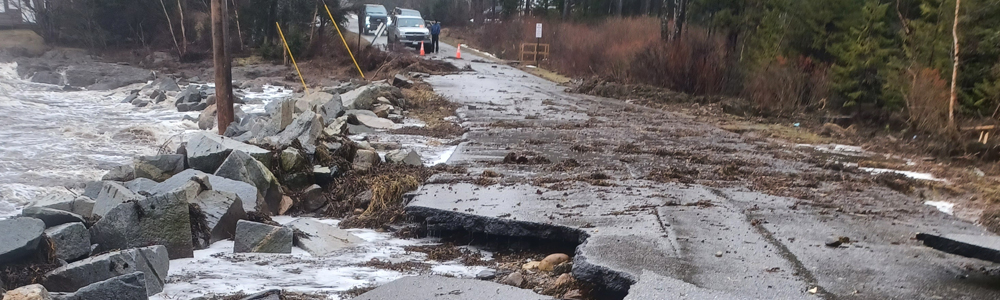
Factory Road and Cold Storage Road are among the areas in Port Clyde most vulnerable to flooding and storm damage, and the town is currently weighing how to make them more resilient. We've developed a set of design options for each road, ranging from minimal changes to fuller redesigns that incorporate living shorelines and raised roadways.
To view the presentation slides, click here: https://aptg.co/Gr4-4R
To read the Select Board "Process & Timing of Next Steps on Cold Storage & Factory Roads" click here: https://aptg.co/z9r2jV
The Resilience Committee focuses on preparing for and mitigating risks associated with climate change and other environmental challenges while supporting sustainable practices. It was established in 2022 to subsume the Ad Hoc Sea Level Rise Committee—the Resilience Committee continues this work on sea level rise but also looks at a broader range of issues, such as extreme storms and rising energy costs. The Committee has been proactive and innovative in addressing these challenges, which is critical for protecting residents’ quality of life, preserving the town’s infrastructure and economy, ensuring access to emergency services, and reducing future municipal expenses.
In 2022, the Committee’s chair at the time, Richard Bates, cold-called several engineering companies to see if they’d be willing to work with the Town to assess our vulnerability to sea level rise. Only one was interested: Sebago Technics, who was looking for a town like us to partner with on this type of well-engineered, community-approved plan. After a series of community conversations and on-the-ground data collection, St. George’s Sea Level Rise Vulnerability & Resiliency Assessment was completed in 2024. It analyzed which sites are most vulnerable to sea level rise and estimated costs of potential mitigation actions, giving a concrete view of priorities and risks. Simultaneously, the Midcoast Council of Governments completed a Working Waterfront Vulnerability Study, which focused on the economic and infrastructural resilience of our local maritime industries.
St. George was one of the first municipalities in Maine to undertake work like this, and it has proven to be crucial in laying the groundwork for identifying our next steps towards creative solutions.
In summer 2025, the Resilience Committee began developing a joint Community Resilience Plan with South Thomaston, using a Community Action Grant funded by the Inflation Reduction Act through NOAA’s Office for Coastal Management. This will be a road map to enhancing resilience to extreme weather and flooding, protecting vulnerable populations and critical infrastructure, and building energy systems that are more efficient, clean, and affordable. In March 2026, the team completed four vulnerability assessments (social, economic, infrastructure, and public health), and there were public meetings to share and discuss the results of these assessments. The slides and handouts from those meetings are linked here. The final report will combine the findings of these assessments and list potential strategies to address the identified challenges and opportunities.
In July 2025, the Resilience Committee began working with Sebago Technics again to develop design alternatives for improving the resilience of Cold Storage Road and Factory Road. These two roads were identified as priorities in the 2024 Sea Level Rise Vulnerability & Resiliency Assessment, and this new project—funded by a grant from the Maine Infrastructure Adaptation Fund—aims to inform a solution that is effective, cost efficient, and considerate of community needs.
There will continue to be opportunities for input and engagement on both of these projects. Keep an eye on the Town calendar & news announcements for dates and details.
Quick Links
Name: | Title: | Term Ends: |
|---|---|---|
Susy Ellis | Chair | 2027 |
Ryan LeShane | Member | 2027 |
Tim Polky | Member | 2027 |
Ingrid Mroz | Member | 2027 |
Carl Danielson | Member | 2027 |
Jason Ludwig | Alternate | 2027 |
Gary Plante | Alternate | 2027 |
Jennifer O’Donnell | Advisor | 2027 |
Sarah Oktay | Advisor | 2027 |
Jane Conrad | Select Board Liason |